
713-222-7211 Call For A Free Consultation
Gulf of Mexico Oil Rig and Platform Accidents
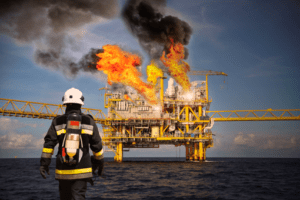 Offshore oil rigs and platforms, especially in the Gulf of Mexico, are vital to the oil and gas industry, but they pose serious hazards to the workers who operate them. Every day, offshore oil workers face hazardous conditions on these massive structures.
When accidents happen on a drilling rig or production platform, the consequences can be devastating.
Explosions, falls, and other incidents on oil rigs often lead to serious injuries or even loss of life.
Below, we outline common causes of oil rig/platform accidents, the rights injured workers have, prevention measures, and how our firm can help you after a serious offshore incident.
Common Causes of Oil Rig & Platform Accidents
Oil rig and platform accidents can stem from a variety of hazards. Among the most frequent and dangerous causes are:
- Explosions and Blowouts
Offshore rigs deal with flammable oil and gas under extreme pressure. Equipment failures or sparks can ignite gases or trigger blowouts, leading to deadly explosions and fires, as seen in the Deepwater Horizon disaster. These incidents often result in severe burn injuries, widespread damage, and environmental harm. - Fires
Even without a full explosion, fires can break out from gas leaks, faulty equipment, or unsafe welding practices. Firefighting is especially challenging offshore, and uncontrolled fires pose serious risks to workers through burns and smoke inhalation. - Falls and Falling Objects
Working at height in unstable weather creates a constant fall risk. Slippery decks, missing guardrails, and lack of harnesses contribute to falls, while falling tools or equipment can strike those below. These accidents can cause serious injuries or fatalities, making safety gear and protocols essential. - Equipment Failures
Rigs rely on heavy-duty machinery like cranes, valves, and blowout preventers. If equipment is defective or poorly maintained, the risk of leaks, fires, or collapses rises sharply. Deepwater Horizon is a prime example of how ignored maintenance can have catastrophic results. - Human Error and Safety Lapses
Fatigue, lack of training, and disregard for safety protocols can turn routine tasks into deadly mistakes. Overlooked pressure warnings, unsecured loads, or ignored inspections are common contributors. When oil companies prioritize profit over safety, preventable accidents become more likely. - Severe Weather and Environmental Hazards
The Gulf of Mexico is no stranger to hurricanes and sudden storms. Rough seas, high winds, or rogue waves can damage structures and sweep crew members overboard. Heat and humidity also wear down both equipment and personnel, increasing the chance of accidents.
Types of Oil Rigs and Safety Considerations
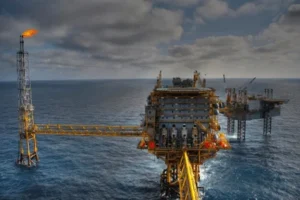
Oil rigs fall into two main categories: offshore and onshore.
Offshore rigs operate in oceans or seas to extract oil and gas from underwater reservoirs. These include fixed platform rigs, anchored to the seafloor, and floating rigs, which can be repositioned.
Offshore rigs face challenges like extreme weather, remote locations, and limited access to emergency care, requiring workers to live on-site for extended periods.
Onshore rigs, located on land, are generally less complex and less costly to operate.
However, they face their own risks, such as wildfires, vehicle accidents, and proximity to populated areas.
While safety challenges vary, offshore rigs are more vulnerable to storms, and onshore rigs may be at higher risk of fire, the core safety principles remain the same: provide thorough training, enforce strict protocols, and ensure proper equipment and emergency preparedness.
Key Components of an Oil Rig
An oil rig comprises several crucial components that work together harmoniously. The main elements include the derrick, drill pipe, blowout preventer (BOP), mud system, and various drilling tools and rigs. These components enable the rig to perform its primary function efficiently and safely and include:
- Derrick – This is the structure that supports the drilling equipment. It provides a stable platform for the drilling operations and houses the crown block, which is responsible for lifting and lowering the drill string;
- Drill pipe – A long, hollow tube that connects the surface drilling equipment to the drill bit. It is made of high-strength steel to withstand the tremendous pressure and torque exerted during drilling. The drill pipe also serves as a conduit for drilling fluids, which help cool and lubricate the drill bit, as well as carry the rock cuttings back to the surface;
- Blowout preventer (BOP) – A critical safety device that prevents the uncontrolled release of oil or gas during drilling operations. It consists of a series of valves and rams that can be activated to seal off the wellbore in case of a blowout or other emergencies. The BOP is designed to withstand extreme pressures and temperatures, providing a vital barrier between the well and the environment;
- Mud system – This plays a crucial role in drilling operations. It circulates drilling fluids, also known as mud, down the drill pipe and back up the wellbore. The mud carries the rock cuttings to the surface, cools and lubricates the drill bit, stabilizes the wellbore, and helps control the pressure in the well. It is a complex system that includes mud pumps, mud tanks, and various additives to optimize its properties; and
- Drilling tools and rigs – These include drill bits, which come in different types and sizes depending on the formation being drilled, and drilling rigs, which are used to rotate the drill string and apply the necessary force to penetrate the rock.
The combination of these key components and the expertise of the rig crew allows oil rigs to efficiently and safely extract valuable hydrocarbon resources from deep beneath the Earth’s surface. The continuous advancements in technology and engineering have made oil rigs more efficient, environmentally friendly, and capable of reaching previously inaccessible reserves.
Common Injuries in Oil Rig Accidents
- Severe burns
- Broken bones
- Spinal cord injuries
- Brain injuries from blasts or falls
- Lung damage from smoke/toxic exposure
- Crush injuries and amputations
 In the worst cases, these accidents are fatal.
Workers often have limited access to immediate medical care offshore, which can make injuries even more dangerous.
Injured workers often require evacuation, prolonged medical care, and extensive rehabilitation.
Preventing Offshore Oil Rig Accidents
Preventing accidents on offshore rigs starts with proactive planning, strict protocols, and a strong safety culture. Key strategies include:
- Routine Maintenance and Equipment Inspections
Regular checks of drilling machinery, electrical systems, safety devices, and rig structures help identify wear, corrosion, or faults before they lead to failures. Timely repairs and replacements are crucial to avoid catastrophic breakdowns. - Thorough Safety Training for Crew
Workers must be trained in fire safety, evacuation procedures, PPE use, and emergency response. Many roles require certification to ensure crews are qualified to handle complex and dangerous tasks. - Strict Enforcement of Safety Protocols and Emergency Drills
Comprehensive emergency plans detail procedures for fires, blowouts, and evacuations. Routine safety drills and clearly defined responsibilities ensure every crew member knows how to respond during a crisis. - Proper Use of PPE and Safety Equipment
All crew members should wear hard hats, flame-resistant clothing, gloves, steel-toed boots, and safety glasses. The rig should also be equipped with extinguishers, gas detectors, harnesses, and life-saving gear, all maintained and easily accessible. - Fall Protection Systems
Given the elevated and hazardous nature of offshore rigs, safety nets, guardrails, and harnesses with lanyards are essential to prevent dangerous falls. - Regulatory Compliance
Operators must meet safety standards set by agencies like BSEE, OSHA, and the U.S. Coast Guard. These regulations, enforced more rigorously since disasters like Deepwater Horizon, aim to minimize risks through accountability and oversight.
Building and maintaining a culture of safety, where every risk is taken seriously and every worker feels responsible for their well-being and that of their peers, is the foundation for preventing offshore accidents.
Offshore Structures: Rigs, Platforms, and Refineries
It’s important to distinguish between related terms:
- Oil Rig: An oil rig is a remarkable engineering structure that serves as a drilling platform for extracting oil from beneath the earth’s surface or sea bed. It comprises various components, including the drilling equipment, storage units, and living quarters for the personnel.
- Oil Platform: An oil platform is a large structure installed in offshore areas, often in deep water, to carry out drilling and production activities. These oil platforms are built with stability and resilience to withstand harsh weather conditions and provide a safe working environment for the crew.
- Oil Field: An oil field, also known as a petroleum field or simply a “field,” is a geological formation that contains significant amounts of oil and natural gas. These formations are the result of millions of years of organic matter accumulation and subsequent transformation under specific geological conditions.
- Refinery: An oil refinery is a complex industrial facility where crude oil is processed to obtain various petroleum products. It involves a series of refining processes, including distillation, cracking, and reforming, to convert the crude oil into valuable products like gasoline, diesel, and jet fuel.
Legal Rights of Offshore Oil Workers
In Texas and under federal law, several legal frameworks address the rights of offshore oil rig workers. These include the Jones Act, the Longshore and Harbor Workers’ Compensation Act (LHWCA), and others.
- Jones Act Claims: The Jones Act, formally known as the Merchant Marine Act of 1920, is a federal statute that provides protection to seamen who are injured in the course of their employment. Under the Jones Act, a seaman is defined as a worker who spends 30% or more of their work time on a vessel in navigation. Some offshore oil rigs are considered vessels under the definition of the Act, making many oil rig workers eligible for protection under the Jones Act.
-
- General Maritime Law (Unseaworthiness): Separate from the Jones Act, maritime law requires that the rig or vessel be kept reasonably safe or “seaworthy.” If a worker is injured because the rig or its equipment was unfit for use (such as defective safety gear or poorly maintained machinery), they may have an unseaworthiness claim against the vessel owner.
- Longshore and Harbor Workers’ Compensation Act (LHWCA): The Longshore and Harbor Workers’ Compensation Act (LHWCA) provides compensation and medical care to certain maritime workers, including those not covered by the Jones Act.
- This federal law covers longshoremen, harbor workers, and other employees who work on navigable waters or in adjoining areas such as docks, terminals, shipyards, or any other area adjoining a navigable waterway that is used for loading, unloading, repairing, or building a vessel.
As an offshore oil rig worker, you may qualify if your work involves these areas and activities. - Texas State Workers’ Compensation: While the Jones Act and LHWCA are primary sources of compensation for offshore oil rig workers, you may also be covered under Texas state workers’ compensation laws, particularly if your work involves both offshore and onshore duties.
Texas workers’ compensation covers employees injured in the course of employment.
However, exclusive offshore work typically falls under federal jurisdiction. If you’re unsure whether or not you might be eligible for this compensation, don’t worry. We can discuss your case more fully at your initial consultation. - Outer Continental Shelf Lands Act (OCSLA): The Outer Continental Shelf Lands Act (OCSLA) extends federal jurisdiction to the outer continental shelf and its drilling platforms and structures. OCSLA applies to workers who are injured while working on fixed platforms on the Outer Continental Shelf (OCS), beyond state territorial waters.
This includes drilling rigs and other offshore facilities.
- Death on the High Seas Act (DOHSA): The DOHSA is a federal law that covers deaths occurring on the high seas; typically three or more nautical miles from shore. It does not apply in cases of deaths that happen in US territorial waters.
In cases where an oilfield employee dies on the high seas, their family members may be able to seek damages as permitted by the DOHSA.
Determining which laws apply can be complex. After a Gulf of Mexico rig accident, multiple parties (the oil company, contractors, equipment makers, etc.) often dispute liability.
A Look at the Worst Oil Rig Disasters in History
The volatile nature of oil extraction, combined with challenging working conditions and complex machinery, has led to some of history’s most devastating incidents:
-
Deepwater Horizon (2010, Gulf of Mexico): A blowout caused by a failed blowout preventer led to an explosion that killed 11 workers and caused the largest marine oil spill in history—4.9 million barrels over 87 days. The disaster triggered sweeping regulatory reforms in offshore drilling safety and equipment standards.
-
Piper Alpha (1988, North Sea): A gas leak and series of explosions killed 167 workers on this UK platform. Failures in communication and emergency procedures made it one of the deadliest offshore disasters, leading to significant improvements in offshore safety protocols.
-
Alexander L. Kielland (1980, North Sea): A structural failure in a leg brace caused this floating rig to capsize, killing 123 of 212 crew members. The incident highlighted the importance of rigorous engineering oversight and maintenance.
-
Ocean Ranger (1982, off Newfoundland): A powerful storm sank the rig, resulting in the deaths of all 84 crew members. This emphasized the need for better storm preparedness and more robust rig design.
-
Ensco 101 (1983): A blowout during drilling operations led to an explosion and fire that killed five workers. The incident was caused by safety lapses and operator negligence, reinforcing the need for strict adherence to safety procedures.
Every Offshore Worker is Entitled to These Rights:
- Medical treatment – Under the Jones Act, any injured maritime worker is entitled to receive financially covered medical treatment. Workers do not need insurance and do not need to worry about medical expenses. Even if, from this injury, a pre-existing condition worsened, the employer MUST provide sufficient coverage. The Jones Act protects workers from being taken advantage of by the medical system.
- Maintenance/Recovery Benefits – These benefits are given to the injured worker to support daily living while recovering from their injury.
- Choice of Doctor – Under the Jones Act, workers are legally allowed to choose their doctor for treatments and assessments; they do not have to stick with the doctor recommended by the employer.
- Non-Recorded Accident Statement – When the accident occurs, the worker will likely provide a statement of the incident. However, the worker is not required to give a recorded statement. Since the worker is likely going through severe trauma, they have the right to provide a recorded statement at a later date.
Experienced Representation for Oil Rig Accident Victims
 At Abraham, Watkins, Nichols, Agosto, Aziz & Stogne, we have over 75 years of experience helping injured workers and their families after oilfield and offshore disasters.
Our firm has been involved in major oil rig accident cases, including representing victims of some of the worst oil rig disasters on record, such as the Piper Alpha platform fire in the North Sea that killed 166 workers.
We understand the oil and gas industry’s safety standards and the courtroom strategies needed to take on big oil companies.
If you or a loved one was injured in an oil rig or platform accident in the Gulf of Mexico or anywhere offshore, we are here to protect your rights. Our oilfield accident lawyers will:
- Investigate the cause of your accident
- Secure vital evidence (safety records, equipment logs, etc.)
- Pursue compensation under the Jones Act, maritime law, or other statutes
- Stand up to oil companies and their insurers
Contact our firm for a free consultation if you’ve been hurt in an oil rig or platform accident. We’ll explain your legal options and help you move forward. You do not have to navigate the aftermath of a catastrophic oilfield accident alone, our attorneys are ready to assist and fight for the compensation you deserve.

Request A
Free Consultation
Fields Marked With An “*” Are Required